For Jain Bunt families of Tulu Nadu
Jain Bunt Matrimony
जय जिनेन्द्र
Jain Bunt families trace their line through the bari, which old records describe as passing from mother to child — alongside the Digambar faith of Moodbidri's bastis and Karkala's Bahubali.
Jain Bunt is a sub-community of its own here, and a Jain Bunt profile has a line just for the bari, worded as your family says it.
Tradition
Digambar
Where families live
Tulu Nadu — Dakshina Kannada and Udupi — and wherever Jain Bunt families have moved since.
Family line
The bari — in old records, the family line through the mother.
The bari
A Jain Bunt family line is the bari. Old records describe it passing through the mother, under aliya santana, and note that children of the same bari did not marry — so the bari is what two families look at first.
A Jain Bunt profile here carries a line of its own for it, “Bari / Bali (Matrilineal lineage)”, beside the sect and the family deity.
Moodbidri, the Jaina Kashi of the South
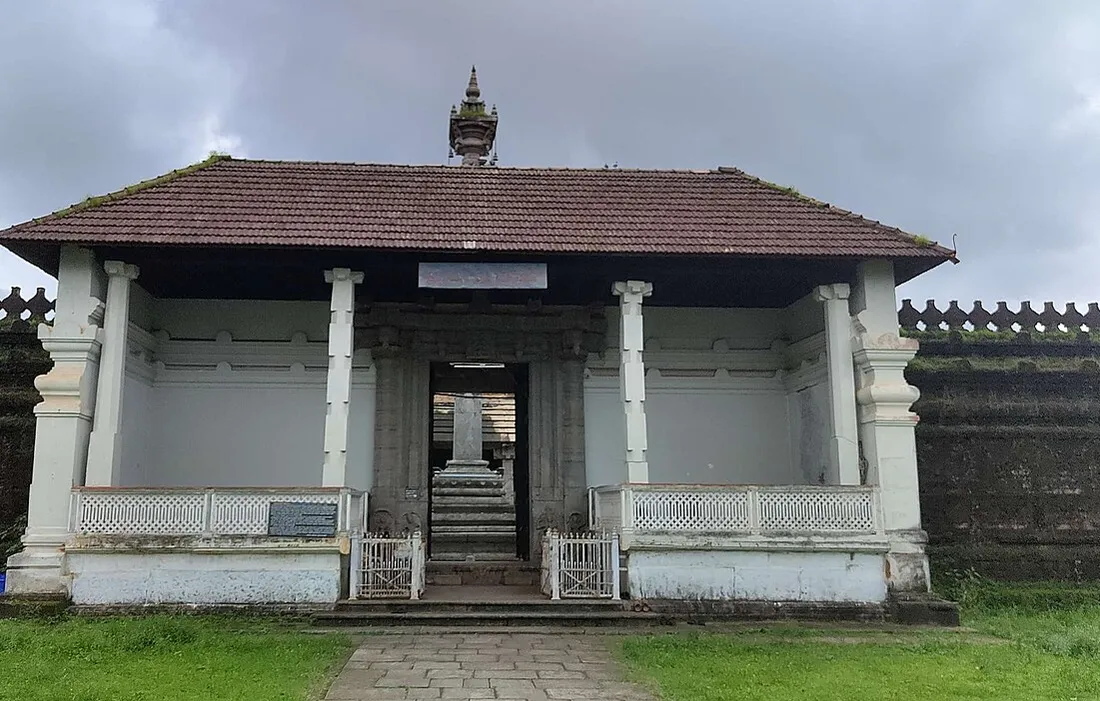
Moodbidri is called the Jaina Kashi of the South. Eighteen basadis rose there between the fourteenth and sixteenth centuries. Held the finest of them, the Saavira Kambada Basadi was begun by the chieftain Devaraya Wodeyar in 1430 and took thirty-one years to finish — a thousand pillars, and no two alike.
The Guru Basadi keeps the treasured Dhavala texts, and a bhattaraka of the Mula Sangh heads the town's Jain math.
Karkala's Bahubali
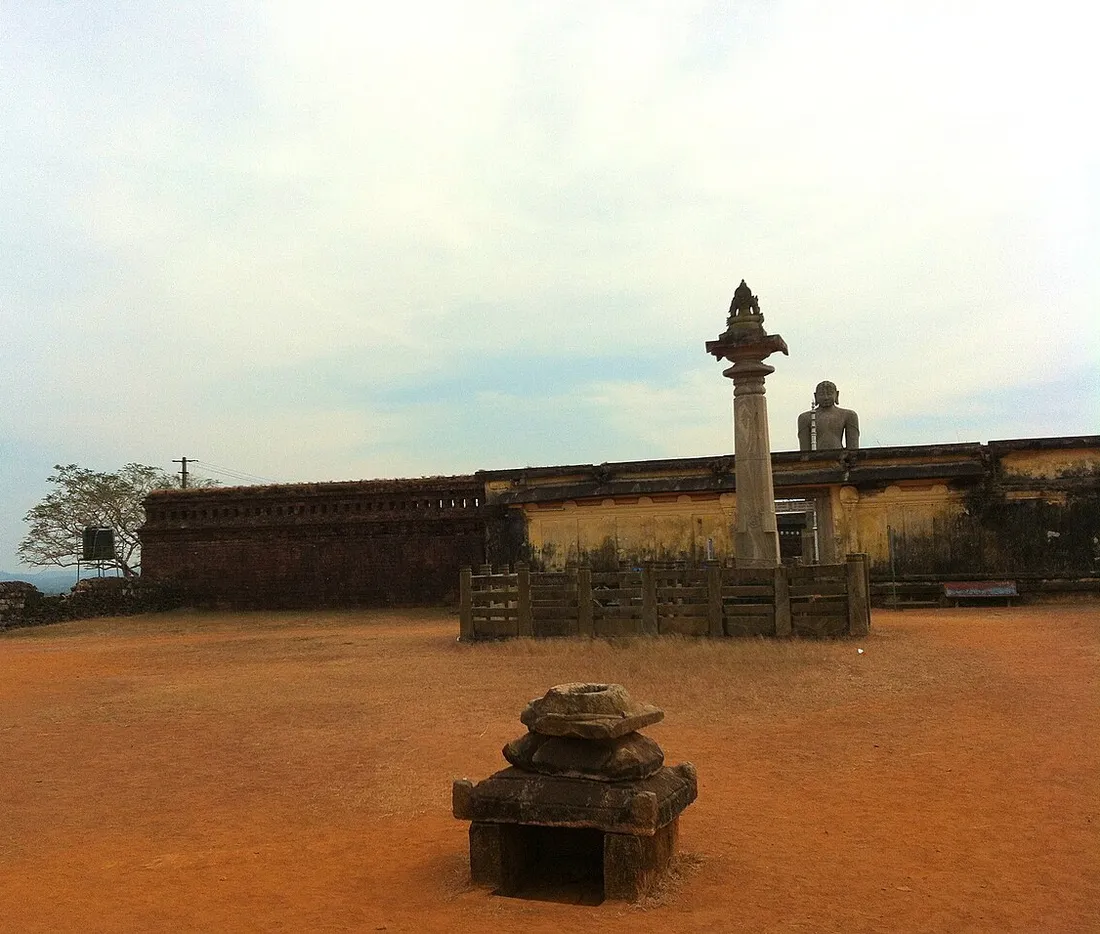
On 13 February 1432, at the wish of his guru Lalitakeerti, pontiff of the Karkala Jaina Math, King Veera Pandya installed a forty-two-foot Bahubali on the rock at Karkala, and in 1436 the Brahmadeva pillar before it.
Venur's Bahubali followed in 1604, raised by Timma Ajila. At both, the Mahamastakabhisheka comes once in twelve years.
Four doors to the four directions
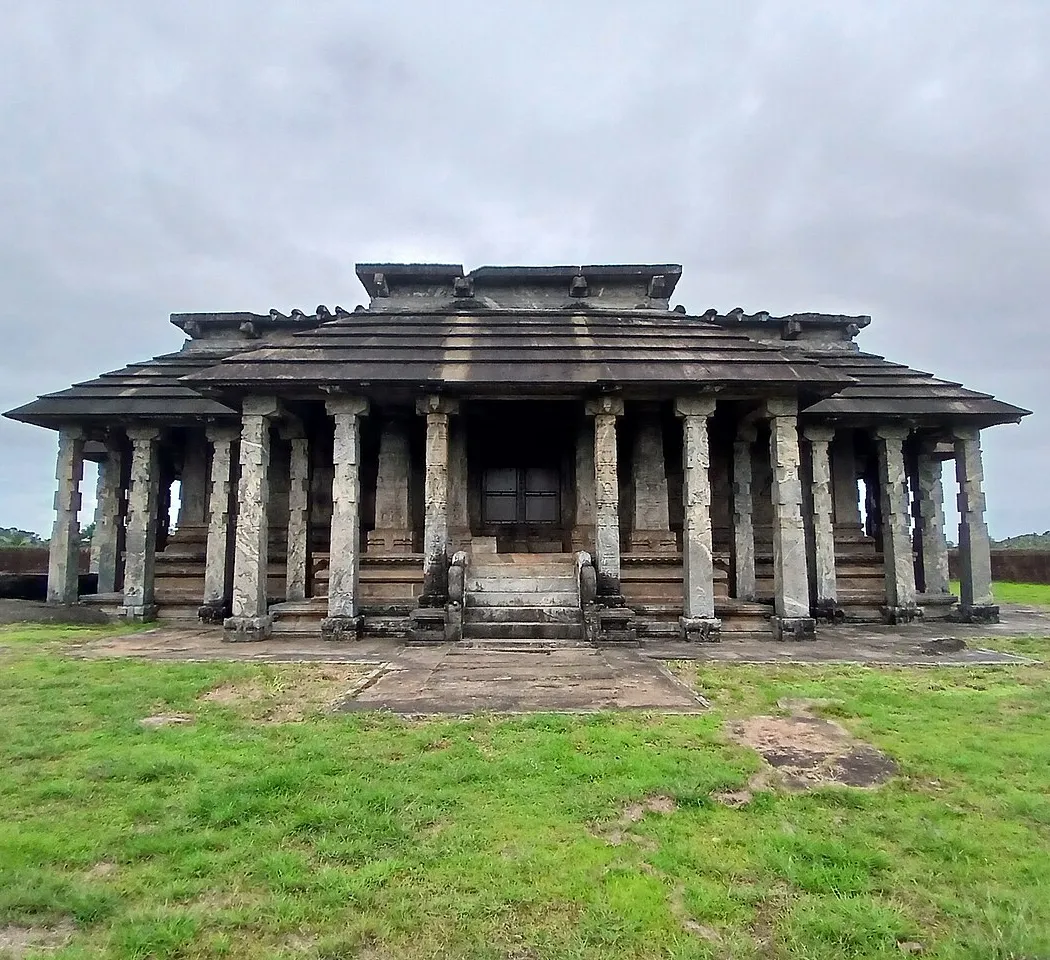
In 1545 Pandya VI built the Kere Basadi in the middle of Karkala's Anekere lake. In 1586 Immadi Bhairava raised the Chaturmukha Basadi on a small rocky hill — a temple with four identical entrances, one to each of the four directions.
A strict Jain kitchen
Records describe Jain Bunt homes as strictly vegetarian, with no food after sunset and no root vegetables. Choose Jain as your dietary preference, and families who keep the same kitchen will see it.
How your profile reads here
- Sub-community — Jain Bunt, chosen from the list (the community is Jain).
- Sect — chosen from the list: the tradition first, then the panth or branch.
- Family line — your bari, in its own “Bari / Bali (Matrilineal lineage)” line, in your own words; optional.
- Dietary preference — choose Jain, and families who eat the same way will see it.
- Horoscope — birth details, nakshatra and rashi are part of every profile; Ashta Koota compatibility is there for families who match kundli.
FAQ
Common questions from Jain Bunt families
Can we write our bari on the profile?
Yes — a Jain Bunt profile has a “Bari / Bali (Matrilineal lineage)” line of its own, to fill in as your family says it.
Will we see only Jain Bunt families?
That is for you to choose. Pick Jain Bunt in the sub-community filter to see Jain Bunt families, or widen it to every Digambar family.
Can we mention our family deity as well?
Yes, in the “Kuldevi or Kuldevta (Family Deity)” line — optional, in your own words.
Will our phone number be visible to everyone?
It is not shown openly on your profile. A member who wants to take an introduction forward can see your contact through the app's Reveal Contact feature and reach you directly, and Government-ID-verified badges help you know who you are speaking with.
Begin your family's search, with trust and dignity
Every profile you see and contact belongs to a Jain family. Phone numbers are never shown openly.
Register / Login