For Parwar Jain families
Parwar Jain Matrimony
जय जिनेन्द्र
Parwar families are Digambar Jains of Bundelkhand and Nagpur, whose family line, old records note, has two parts — the gotra, and within it the mur.
Parwar is a sub-community of its own here. Look for Parwar families, or for every Digambar family.
Tradition
Digambar
Where families live
Bundelkhand and Nagpur, and every city Parwar families have made their home.
Family line
The gotra and the mur — records list twelve gotras of twelve murs each, and a match avoiding four.
Named in stone
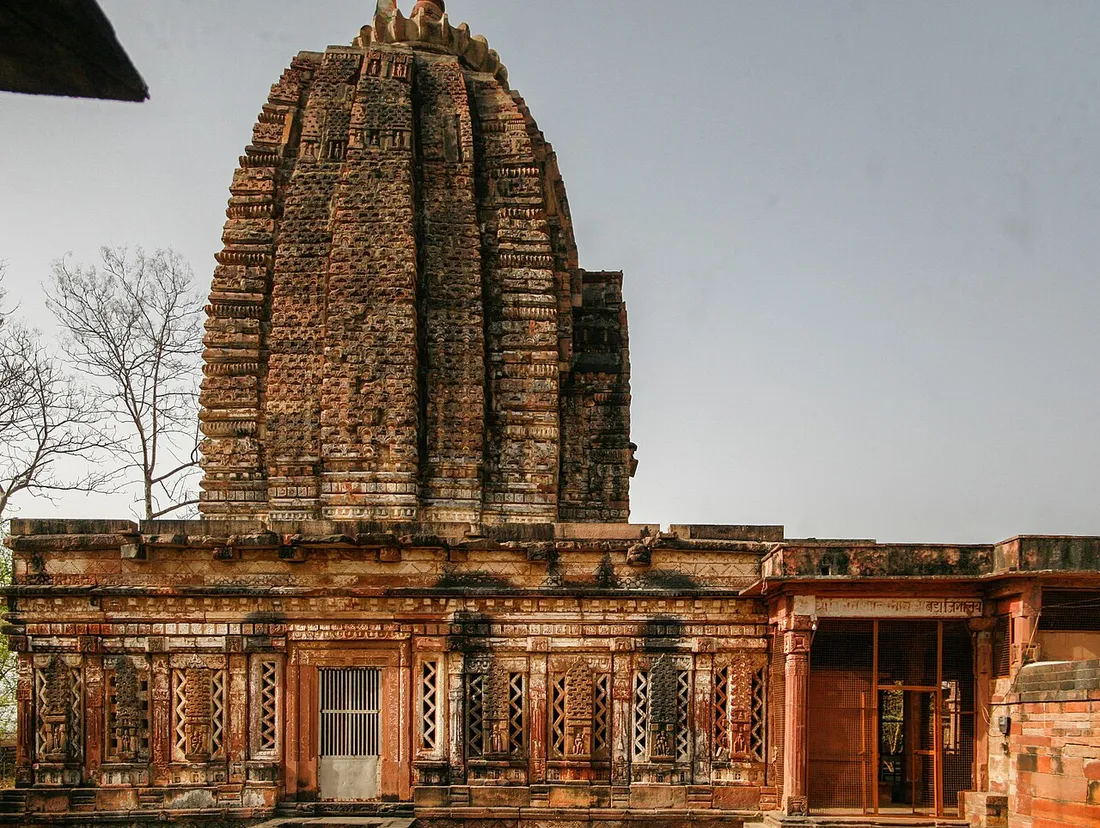
Parwar families can read their community's name in stone. Inscriptions along the Betwa river call them Paurapatta — at Vidisha in 948 CE, at Pachrai in 1065, at Aharji in 1152 and 1153, and at Chanderi, Sironj and Narwar.
At Deogarh, a long inscription of 1436 tells how Singhai Lakshmana and his large family installed an image of Shantinatha under Bhattaraka Devendrakirti — probably the first mention of the title Singhai in the region.
Teachers and scholars
Taran Swami, who founded the Taran Panth, came from the Parwar community, and so did the Bhattarakas of Chanderi — their seat was founded by Bhattaraka Devendrakirti.
In modern times Parwar homes gave Jain learning Pandit Nathuram Premi, historian and publisher, and Pandit Balachandra Shastri, remembered for his work on the Satkhandagama.
From Bundelkhand to Nagpur, and beyond
Most of Nagpur's Parwar families came from Sagar district, and Itwari in Nagpur has a Parwarpura of Parwar homes and shops. The Parwar Sabha was founded at Ramtek in 1917, and a Parwar Directory of 1924 recorded Parwar families town by town and village by village.
Today Parwar families also live in Delhi, Mumbai and Bengaluru, and a few in America.
Gotra and mur
Records of the community list twelve Parwar gotras, each divided into twelve murs — not every Parwar family keeps them. Records also note that a Parwar match avoids four gotras, and more or fewer in some places, by local custom.
If your family keeps a gotra and mur, write both together in the “Gotra or Family Name” line.
The Taranpanthi tradition
Some Parwar families follow the Taran Panth and are called Samaiya — after the Samayasara of Acharya Kundakunda, on which Taran Swami based his teaching.
Families of the Taranpanthi tradition within the Digambar fold can choose “Digambar – Taranpanthi (Samaiya)” in the sect line, and others can look for it.
How your profile reads here
- Sub-community — Parwar, chosen from the list (the community is Jain).
- Sect — chosen from the list: the tradition first, then the panth or branch.
- Family line — your gotra and mur, in the “Gotra or Family Name” line, in your own words; optional.
- Dietary preference — choose Jain, and families who eat the same way will see it.
- Horoscope — birth details, nakshatra and rashi are part of every profile; Ashta Koota compatibility is there for families who match kundli.
FAQ
Common questions from Parwar families
Can we write both our gotra and our mur?
Yes — together, in the “Gotra or Family Name” line. Families who do not keep them can leave the line empty.
We are Samaiya. How do we show it?
Choose your own sub-community — or “Other Jain community” — and “Digambar – Taranpanthi (Samaiya)” in the sect line.
Can we see every Digambar family too?
Yes. Keep the sub-community filter on Parwar, add others, or leave it open to every Digambar family.
Will our phone number be visible to everyone?
It is not shown openly on your profile. A member who wants to take an introduction forward can see your contact through the app's Reveal Contact feature and reach you directly, and Government-ID-verified badges help you know who you are speaking with.
More Jain communities
Begin your family's search, with trust and dignity
Every profile you see and contact belongs to a Jain family. Phone numbers are never shown openly.
Register / Login